
The impact of excessive soot in slow steaming
Slow steaming has become one of the shipping industry's most widely adopted strategies for improving Carbon Intensity Indicator (CII) performance and reducing fuel consumption. However, operating modern engines at reduced loads for extended periods has introduced a new set of technical challenges that were less severe when vessels routinely operated near their design load.
Engine manufacturers, boiler makers and classification societies recognize that prolonged low-load operation increases the likelihood of:
- Incomplete combustion
- Soot accumulation
- Sulfuric acid corrosion
- Reduced exhaust gas boiler (EGB) efficiency
- Increased exhaust gas back pressure
- Soot fires
- Turbocharger efficiency losses
The challenge is managing the entire chain of events, from combustion quality inside the cylinder to deposit formation inside the exhaust gas boiler.
Exhaust gas boilers rely on exhaust gas temperature, flow rate and velocity to maintain efficient heat transfer. During slow steaming, lower exhaust gas temperatures and reduced gas velocity decrease heat recovery efficiency and weaken the natural self-cleaning effect of boiler tubes, allowing soot deposits to accumulate more rapidly on heat-transfer surfaces. According to Kangrim, prolonged low-load operation can result in reduced heat recovery, lower steam production, increased soot deposition, and accelerated sulfur corrosion. As a result, operators are often faced with an unexpected trade-off: while fuel savings improve through slow steaming, exhaust system fouling, cleaning requirements and maintenance demands increase.
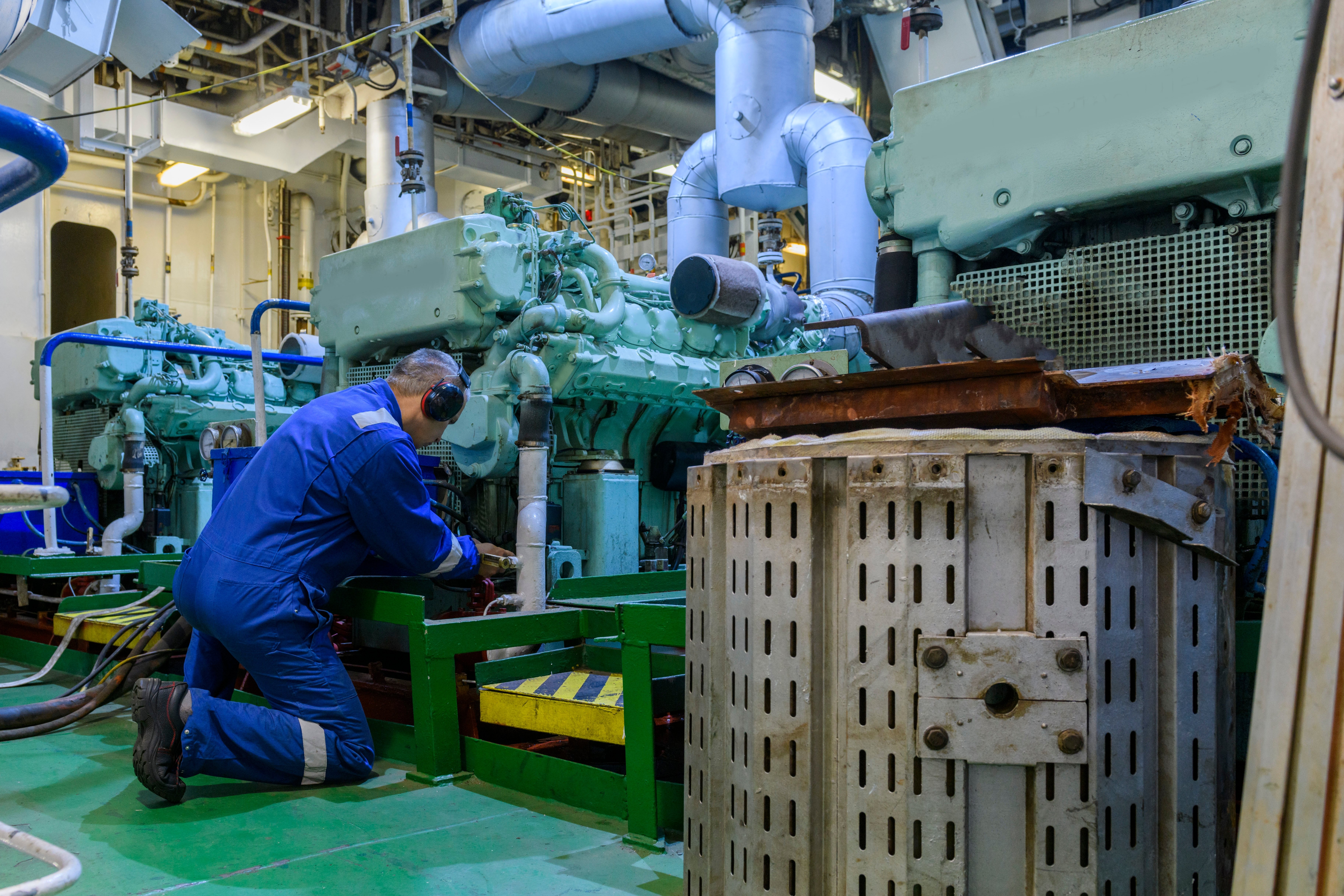
One of the most overlooked consequences of slow steaming is the relationship between soot accumulation and acid corrosion.
During combustion:
Sulfur: SO₂ → SO₃
Fuel combustion → Water vapor
When exhaust gas temperatures fall below the acid dew point:
SO₃ + H₂O → H₂SO₄
Sulfuric acid forms and condenses directly onto heat-transfer surfaces.
Soot deposits worsen the problem by:
1) Retaining moisture
2) Absorbing acidic condensate
3) Creating localized corrosion cells
4) Acting as thermal insulation
The result is accelerated cold-end corrosion, particularly in economizers and exhaust gas boilers operating under prolonged low-load conditions.
DNV warning: when soot becomes a safety hazard
Recent DNV guidance highlights the escalation path from fouling to machinery damage. In fin-type and pin-type exhaust gas boilers, soot accumulation combined with poor water circulation can create smouldering deposits.
These deposits may eventually develop into soot fires. DNV warns that soot fires can generate temperatures sufficient to:
1) Melt uncooled tubes
2) Damage adjacent components
3) Cause extensive heating-surface failures
4) Potentially trigger hydrogen fires following tube rupture
At this stage, soot is no longer a maintenance concern, it now becomes a safety risk.
DNV also identifies plugged tubes as a significant concern. Uncooled plugged tubes significantly increase the likelihood of soot fires and can increase exhaust gas back pressure, negatively affecting turbocharger efficiency.
This is particularly important during slow steaming because reduced exhaust gas velocity promotes soot accumulation, while plugged tubes create localized hot spots, and together these conditions significantly increase the risk of soot fires and associated boiler damage.

Reducing soot before it's creation
Continuous low-load operation reduces cylinder temperatures, leading to less efficient fuel ignition and less complete combustion, which increases the amount of unburned carbon carried into the exhaust system and ultimately elevates soot loading within the economizer and exhaust gas boiler. A key observation from OEM guidance is that most recommendations focus on managing soot after it has already formed through activities such as soot blowing, pressure-drop monitoring and condition-based cleaning. FuelPower Catalyst complements these maintenance practices by addressing the problem earlier which is inside the combustion process itself.
FuelPower Catalyst is designed to improve combustion through catalysis, improve fuel economy, reduce carbon deposits, reduce soot and smoke formation, improve the combustion of difficult fuels, and support operation on HSFO, VLSFO and bio-residual fuels. The technical principle is straightforward: better combustion produces less soot. Less soot generated inside the cylinder means less soot entering the turbocharger, economizer and exhaust gas boiler, helping to slow the rate of deposit formation throughout the exhaust system.
Third-party testing demonstrated that FuelPower Catalyst improved Estimated Cetane Number (ECN) by more than 6%, while a CCS-witnessed trial on a MAN B&W 6S35ME-B9 engine operating on B30 VLSFO recorded a 1.51–2.17% reduction in SFOC when used with FuelPower Conditioner. These results indicate improved combustion efficiency, helping reduce unburned carbon and the amount of soot entering the exhaust system.
Managing the soot that remains
Even with optimized combustion, a proportion of soot particles will survive and enter the exhaust stream. During slow steaming, lower exhaust temperatures and reduced gas velocities increase the likelihood of these particles accumulating on economizer and exhaust gas boiler surfaces, accelerating fouling and reducing heat-transfer efficiency.
FuelPower Soot Remover Liquid Plus serves as the second line of defense by managing the soot that remains after combustion. It is specifically developed for low-temperature exhaust gas systems where soot would otherwise accumulate and harden into firescale deposits. By promoting controlled soot oxidation and reducing the impact of sulfur-related corrosion, it helps maintain cleaner heat-transfer surfaces, improves soot-blower effectiveness, reduces fouling rates and supports longer intervals between cleaning operations, particularly during prolonged slow-steaming operation.
FuelPower Soot Remover Powder is designed for high-temperature applications such as fired auxiliary boilers, where soot can still form despite elevated furnace temperatures. Since effective soot burnout depends not only on temperature but also on oxygen availability, residence time and turbulence, deposits can continue to accumulate on heat-transfer surfaces. In these conditions, a powder-based treatment helps condition deposits and control fouling, making it particularly suitable for high-temperature boiler environments
The challenge identified by Alfa Laval and MAN is that slow steaming often forces operators to increase inspection frequencies, monitor pressure drop more closely, perform more frequent soot blowing, and shorten cleaning intervals because soot accumulates faster under low-load conditions.
Complementing these OEM recommendations, FuelPower Catalyst and FuelPower Soot Remover Liquid Plus and Powder can help reduce the rate at which fouling develops, making the required maintenance activities more effective and less frequent. These products reduce the rate at which deposits accumulate rather than replacing soot blowing or inspection routines. Softer deposits are more easily removed when soot blowers are operated, pressure-drop increases occur more slowly, and cleaning intervals can be extended.
The operational benefits have also been demonstrated in service. A Ro-Ro vessel operating on a slow-steaming route between Japan, Europe and the United States previously required exhaust gas boiler cleaning every two months due to unstable pressure and temperature readings caused by fouling. Following installation of the dosing system and continuous use of FuelPower Soot Remover Liquid Plus, boiler temperatures and pressure remained stable throughout the trial period. The vessel subsequently extended the cleaning interval to 16 months before the next major cleaning was required, demonstrating the product's ability to maintain boiler cleanliness over prolonged operating periods.
Boost efficiency and manage assets
Control fuel performance across storage, combustion, and exhaust to reduce losses, protect assets, and improve emissions performance.
Explore the tank to wake approach-

Why MGO management matters more than ever in the growing ECAs
As the Emission Control Areas (ECAs) expand, more vessels will need to operate on marine gas oil (MGO) or bio-MGO for extended periods. While this shift supports environmental compliance, it also introduces new operational challenges that cannot be overlooked.
-
Class verification: Up to 2.17% fuel oil saving and 31% prolonged stability
Industry leading class verified results show Wilhelmsen additives cut fuel use by up to 2.17% on B30 VLSFO and extend B100 biodiesel stability by 31%. Real engine and lab data for biofuel operators.
-
Case study: how pre-combustion treatment prevented a $75K in fuel loss
A bulk carrier faced purifier shutdown every few minutes from unstable VLSFO. See how structured fuel treatment saved 150 tons and avoided $75K loss.
-
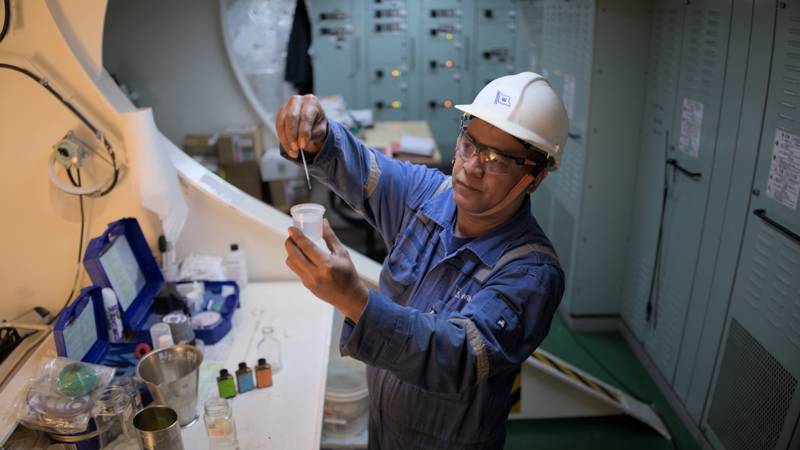
Is your blended fuel compatible? Simple onboard testing explained
As VLSFO formulations vary and biofuel blends become more common, many vessels are now handling a wider range of fuel chemistries than ever before. Without a simple check up front, the first sign of trouble may be blocked filters, overloaded separators, or rising sludge volumes.