Your EAL checklist for VIDA readiness
Wilhelmsen insights
|
Alex Qiang, Head of Product Management - Fuel & Lubricant Solutions

The 2013 VGP regulates incidental vessel discharges through a permit, including state-specific conditions. VIDA establishes a national framework: the U.S. Environmental Protection Agency (EPA) sets discharge performance standards, while the U.S. Coast Guard (USCG) develops implementation, compliance and enforcement requirements. The aim is greater consistency, although VIDA retains routes for states to request additional protections.
A phased transition and not an immediate replacement
EPA published its final standards in October 2024. Publication alone does not end the VGP: the replacement standards apply when the corresponding USCG regulations are final, effective and enforceable. Until then, operators must continue meeting the existing 2013 VGP requirements.
The EAL principle remains, with a broader application review
EALs are already required under the VGP at oil-to-sea interfaces unless technically infeasible. VIDA carries that obligation into a general oil-management standard. Review submerged equipment as well as deck-mounted, external and overboard equipment with a lubricant discharge pathway; do not assume that every exposed lubrication point automatically requires an EAL.
Evidence matters as much as the label
EALs must meet biodegradability, minimal-toxicity and non-bioaccumulation criteria. Request product-specific supporting evidence rather than relying on an ecolabel alone. Using an EAL does not remove the obligation to prevent leaks, minimise discharges and maintain equipment.
Applications to review
Prioritise equipment where lubricant can enter surrounding waters, including:
- Propulsion and steering: stern tubes, shaft seals, controllable pitch propellers, thrusters, azimuth systems and fin stabilisers.
- Deck and hoisting machinery: cranes, winches, mooring and anchoring equipment, open gears and exposed bearings.
- Wire ropes and access equipment: crane ropes, accommodation ladders, ladder winches and sheaves.
- Hydraulics and ramps: hoses, cylinders and power packs serving hatch covers, stern or side ramps and overboard equipment.
Assess each application individually against its design, sealing arrangements and potential leakage or wash-off pathway.
Your readiness checklist
- Identify: Map relevant lubrication points and record the current oil, hydraulic fluid or grease, viscosity, quantity and maintenance interval.
- Assess: Check discharge pathways, OEM requirements, seals and material compatibility. Prioritise high-exposure equipment and record the basis for any technical-infeasibility assessment.
- Select and plan: Choose a suitable EAL for the load, temperature and water exposure. Confirm compatibility and any flushing requirements; align conversion with planned maintenance or dry-docking.
- Document: Keep product and safety data sheets, EAL evidence, applicable compliance letters, OEM approvals and conversion records together. Identify gaps and assign follow-up actions.
- Stay ready: Continue VGP compliance, monitor USCG implementation requirements and update vessel procedures when applicable. Do not describe a product as “VIDA compliant” without approved, product-specific support.
How Wilhelmsen and Klüber can support you
Wilhelmsen Ships Service and Klüber Lubrication combine maritime support with application and lubricant expertise. Together, we can help you:
- Review applications and identify potential oil-to-sea interfaces.
- Match current lubricants with suitable EAL alternatives, considering viscosity, load, temperature, water exposure and available OEM recommendations.
- Plan lubricant conversions and review compatibility information.
- Access available product-specific supporting documentation and supply through Wilhelmsen’s maritime network.
Ready to prepare your vessel or fleet? Contact Wilhelmsen Ships Service for an application review, suitable Klüber EAL options and a practical plan to close readiness gaps.
Articles you might be interested in
-

Why speciality marine lubricants matter for drilling and production assets
Lubrication failures are one of the most frequent root causes of equipment damage offshore. For operators, these failures directly impact safety, uptime, and total cost of ownership.
-
Compressor oils that protect performance, efficiency and vessel uptime
Compressor oil does more than lubricate. Discover how the right lubricant protects vessel efficiency, prevents unplanned downtime, and lowers total operating costs across air, refrigeration and gas compressor systems.
-
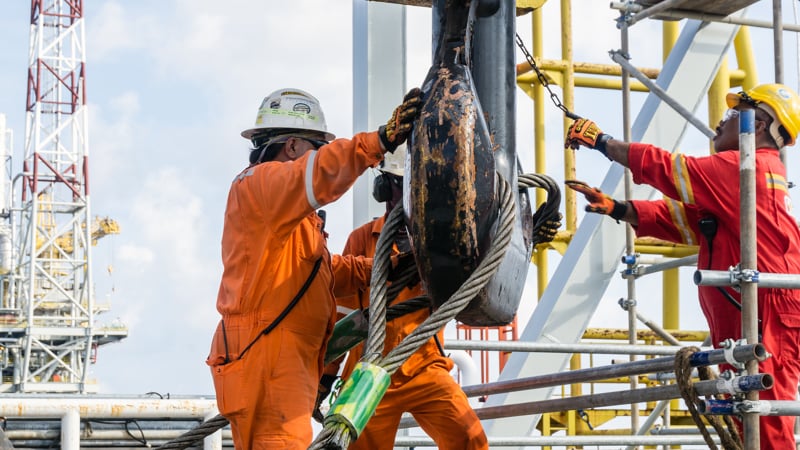
How to prevent wire rope failure in marine offshore environment with better lubrication
Wire ropes in marine and offshore operations are exposed to constant load, movement, saltwater, moisture, and mechanical stress, making proper lubrication critical to safety and reliability. With increasing regulatory focus under US VGP and VIDA, improved grease retention also supports better operational control and reduced incidental discharge risk.
-
Understanding EAL in marine lubrication
Understand environmentally acceptable lubricants (EAL) and see how Wilhelmsen Ships Service & Klüber supports valued customer to combine environmental and economic benefits with dedicated EAL specialty lubricant