Detection and control of microbial growth in marine fuel
Microbial growth in marine fuel is a common and costly problem, especially in low-sulphur fuels as they hold more water and have fewer natural biocidal properties than older high-sulphur blends. This happens because microbes such as bacteria, yeast, fungi, live in the water phase, not the fuel itself, and feed on hydrocarbons at the fuel-water interface. Every fuel tank accumulates some water from condensation, humid bunkering, or fuel that already contains trace water, so any tank with standing water is a candidate for growth, particularly in warm, humid, or slow-turnover storage conditions.
Fuels containing FAME require particular attention because FAME can attract and retain water and is associated with increased susceptibility to microbial activity.
Left unchecked, microbial colonies build up as biomass and sludge that migrate through the fuel system. This raises filter differential pressure, restricts fuel flow, and contributes to deposits on tank and system surfaces. Some microbial activity also produces acidic by-products, which are associated with localized corrosion so the risk here isn't just a fuel-quality issue, it can extend to the physical condition of the tank and system components themselves.
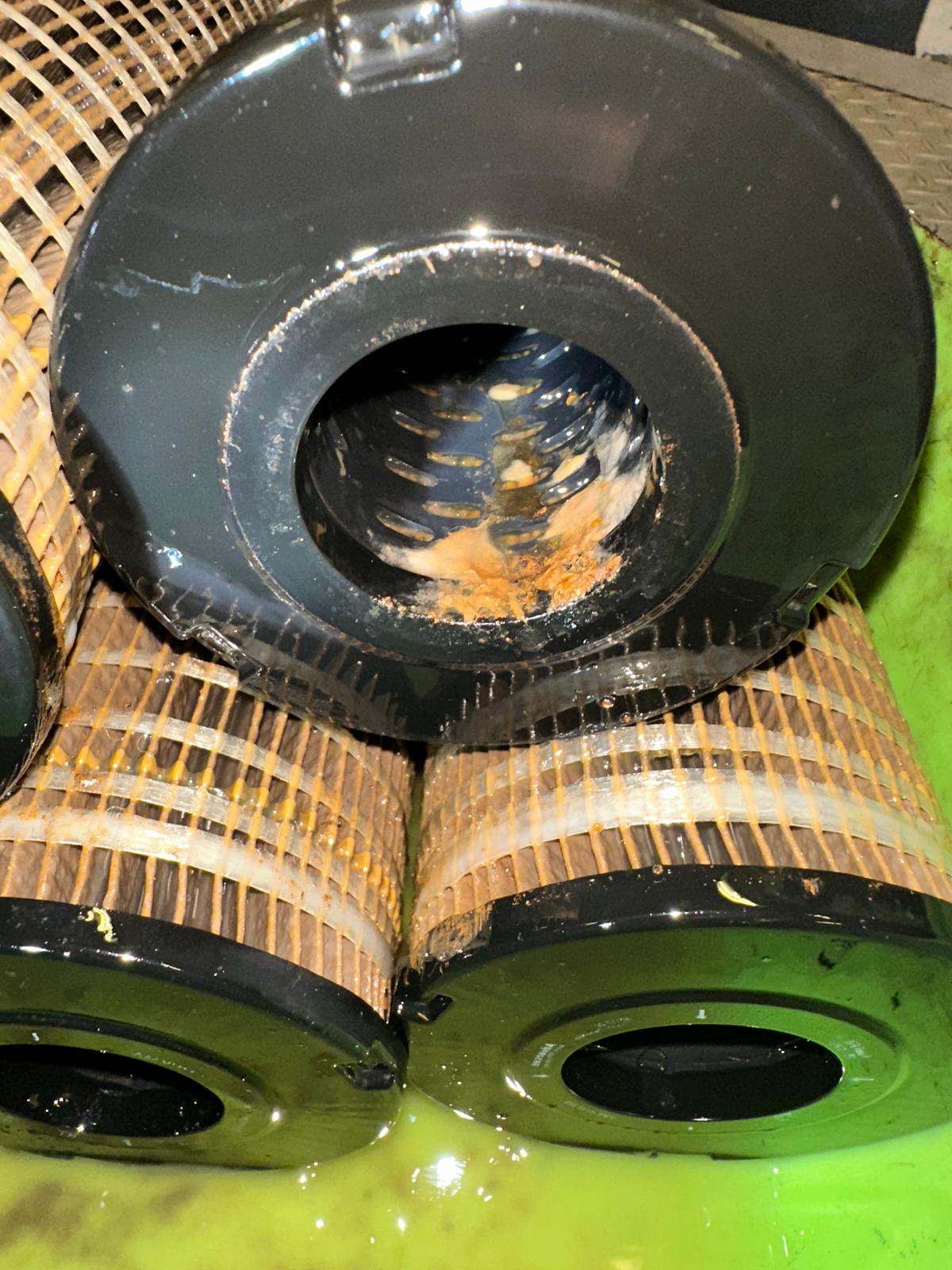
Contamination does not always announce itself clearly. The most common indicators are unexplained or repeated filter blockage, appearance of dark or slimy material, persistent hazy fuel, and unusual odour, deposits, or corrosion around tank bottoms and fuel-system components. A failed onboard screening test or laboratory analysis is often the clearest signal of all. Recognizing the warning signs:
- Unexplained or repeated filter blockage
- Dark, stringy or slimy material in tanks, drains or filters
- Persistent water bottoms or hazy fuel
- Unusual deposits, odour or corrosion around tank bottoms and fuel-system components
- A failed onboard screening test or laboratory microbial analysis
Visual appearance is not proof. Clear fuel may still fail microbial screening, while soft or wax-like deposits may have non-microbial causes. Representative sampling and appropriate testing should guide the response.
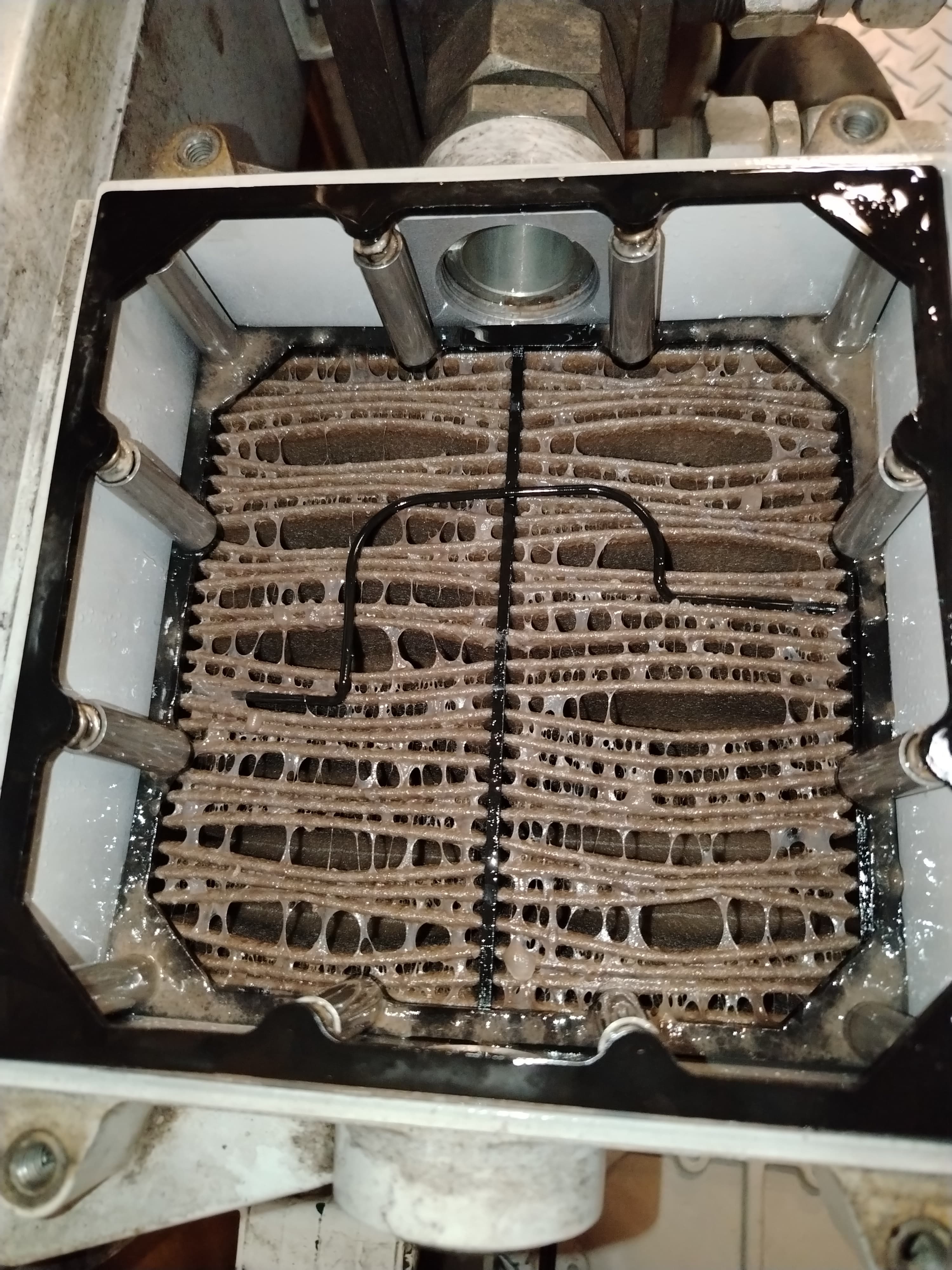
The commercial case for prevention is straightforward: the later the intervention, the larger and more complex the response may become. Beyond the additive itself, late intervention can bring filter consumption, tank cleaning, fuel handling, laboratory work, maintenance and the risk of operational disruption.
| Treatment mode | Indicative rate | Quantity for 300 MT | Relative chemical demand |
| Preventive, continuous | 0.20 L/t | 60 L | 1 X |
| Decontamination | 0.80 L/t | 240 L | 4 X |
| Shock treatment | 3.00 L/t | 900 L | 15 X |
For the 300 MT fuel, preventive treatment requires approximately 60 litres of MG-Control, compared with 900 litres at the shock-treatment rate. In volume terms, shock treatment therefore requires 15 times more additive than preventive treatment. This comparison is illustrative and based on the stated MG-Control dosage modes. Actual treatment requirements depend on the fuel volume, contamination severity, and system condition.
The potential exposure extends beyond additive volume: a 2018 report from The Swedish Club cited an average cost of USD 344,000 per fuel-related damage incident on vessels. This industry figure provides context for the cost of late intervention.
Mitigating the risks with preventive treatment of microbial contamination
For heavily contaminated systems, treatment is best planned as a managed operation rather than a single chemical addition: filters need to be monitored closely, water bottoms removed, and persistent biosludge cleaned out physically where required. DieselPower MG-Control is a self-dispersing fuel biocide designed for both preventive treatment and the treatment of existing microbial contamination. It can be dosed directly into the fuel tank, either manually or through a dosing pump. As with any biocide treatment, its effectiveness depends on more than the correct dose; distribution through the fuel volume, adequate contact time, water removal, and the physical condition of the tank and fuel system all play a part.
As always, the current product and safety data sheets, along with any applicable local requirements, should be checked before use.
Practical lessons for ship operators
A few principles hold regardless of the specific system or fuel grade involved. Appearance alone should not be relied on. Contamination should be tested for whenever it's suspected. Water removal is the first line of defense, and it should continue after chemical treatment, not stop once dosing begins. The dose needs to match the confirmed condition, and the product needs to be properly distributed through the treated fuel volume. Filters should be expected to capture released biomass after treatment, so adequate monitoring and spares should be planned for in advance. Heavily fouled tanks and system components should be physically cleaned, since residues can shelter microorganisms and drive recontamination. And the outcome should always be verified through repeat testing and continued trend monitoring, rather than assumed.
Microbial growth in marine fuel is best controlled through a combined programme of prevention, representative testing, targeted treatment, residue management, and verification. DieselPower MG-Control provides the treatment component of that programme, but it works alongside dry tanks, good housekeeping, correct application, and follow-up monitoring. The cases above show why disciplined diagnosis and operational planning matter most when contamination is extensive, or when FAME-containing fuels are involved.
Boost efficiency and manage assets
Control fuel performance across storage, combustion, and exhaust to reduce losses, protect assets, and improve emissions performance.
Explore the tank to wake approachArticles you might be interested in
-
How to choose the right fuel and lube oil test kit for your vessel
This guide is intended to support chief engineers and technical superintendents in selecting onboard test kits that align with vessel size, engine configuration, fuel strategy, and operating profile.
-
Safeguarding your fuel system
Microbial contamination: the silent threat hiding in your fuel tanks as marine fuels evolve, so do the risks. Microbial growth fueled by water ingress is quietly degrading fuel quality, threatening vessel safety, and driving up maintenance costs. In this article, Wilhelmsen experts unveil the Prevent – Test – Treat (PTT) methodology, an integrated, proactive approach to fuel management that helps you stay ahead of microbial risk. Discover how simple steps can protect your fuel, your crew, and your bottom line. Read on and contact us to safeguard your operations.
Wilhelmsen insights |
Alex Qiang, Head of Product Management - Fuel & Lubricant Solutions -
Embrace fuel diversity for the future
Post IMO 2020, the fuel challenges remain unchanged while being more complicated when Very Low Sulphur Fuel Oil (VLSFO) was implemented in 2020 to be compliant with IMO 2020 regulation. The fuel diversity in the market including residual fuel type (HSFO/VLSFO/ULSFO), distillate fuel type (LSMGO/Diesel), Bio-blends (Bio-VLSFO/HFO, Bio-LSMGO), etc. Invite new challenges and risks.
Wilhelmsen insights |
Alex Qiang, Head of Product Management - Energy Solutions -
Managing fuel quality issues and meeting regulatory requirements
For shipowners and operators, maintaining fuel quality at a time of tightening regulation requires a clear understanding of the challenges
Wilhelmsen insights |
Shawn Lim, Head of Technical Sales and Business Development East, WSS Emissions, Fuels & Lubes