Responsible Refrigeration: A practical approach for ships
Refrigerant leaks increase emissions, energy consumption and compliance risk. A Responsible Refrigeration approach helps shipowners stay ahead of evolving regulations while improving operational efficiency.
Wilhelmsen insights
|
Francis Lai, Head of Product Management - Refrigeration

Refrigeration is essential onboard, but its emissions and compliance risks are often overlooked. As high-GWP refrigerants are phased down and handling requirements tighten, shipowners need more than a simple gas replacement.
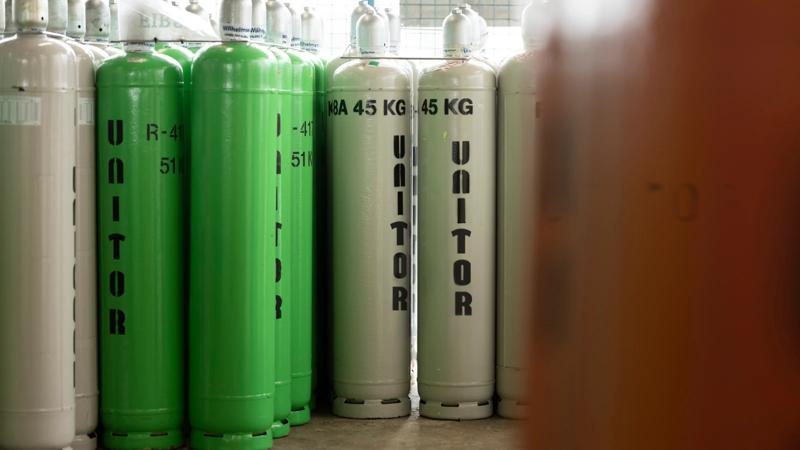
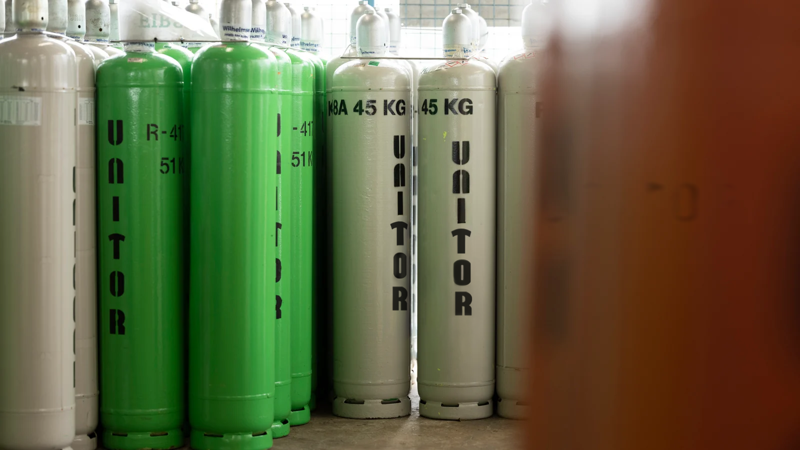
Unitor low-GWP refrigerants in storage before fulfilment
Responsible Refrigeration combines suitable lower-GWP refrigerants, leak prevention, recovery, efficient operation and traceable sourcing to reduce emissions and strengthen fleet reliability. This article explains the regulatory shift, the operational risks of refrigerant loss and three practical priorities that can help maritime operators move from reactive top-ups towards more consistent lifecycle management.
Why refrigerant management matters
A refrigerant leak can increase energy consumption, strain components and raise replacement costs. In confined spaces, leaked gas can displace air and create a potential crew safety hazard. Reduced cooling performance may also affect provisions, cargo and vessel operations.
Refrigerant losses are also direct, Scope 1 greenhouse gas emissions because they come from equipment under the shipowner’s control. Yet they can remain less visible than fuel-related emissions when systems are not closely monitored. Managing refrigerants responsibly therefore supports both operational performance and emissions reporting.
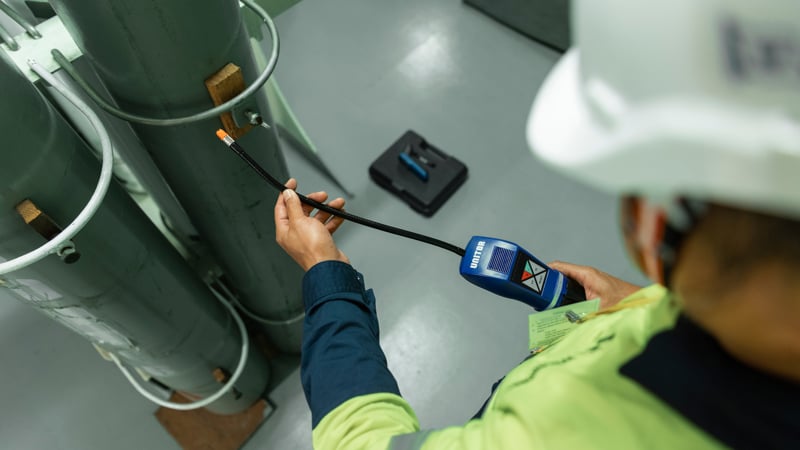
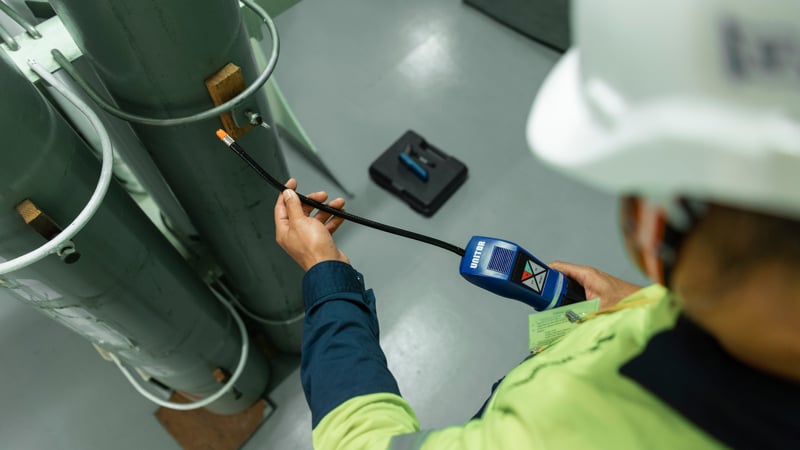
Unitor leak detector being used to check a cylinder
A global shift in refrigerant regulation
The regulatory direction is clear: high Global Warming Potential refrigerants are being phased down, and expectations for responsible handling are increasing. The Kigali Amendment to the Montreal Protocol provides the global framework for reducing hydrofluorocarbon use. Regional measures, including the revised EU F-Gas Regulation and the US AIM Act, reinforce that shift through tighter supply controls and stronger lifecycle requirements.
Although requirements vary between jurisdictions, three common trends matter to internationally trading vessels. High-GWP refrigerants are becoming more restricted and potentially harder to source. Leak prevention, recovery and responsible servicing are receiving greater attention. Traceability and documentation are becoming more important throughout the supply chain.
This means compliance cannot be treated as a one-time refrigerant change or a local port requirement. Shipowners need refrigeration practices that remain practical across trading regions and that can adapt as rules, product availability and enforcement evolve.
Compliance is about more than refrigerant choice
Replacing a high-GWP refrigerant with a lower-GWP alternative can reduce climate impact, but the gas selected is only one part of the solution. Regulations increasingly look at how refrigerants are managed throughout their lifecycle, including leak detection, recovery, servicing, record keeping and sourcing.
A transition that ignores system design, safety requirements or global serviceability may introduce new operational risks. Likewise, a compliant refrigerant can still create unnecessary emissions if the system leaks or operates inefficiently. A more complete approach must combine the right refrigerant with disciplined maintenance, trained crews and reliable supply.
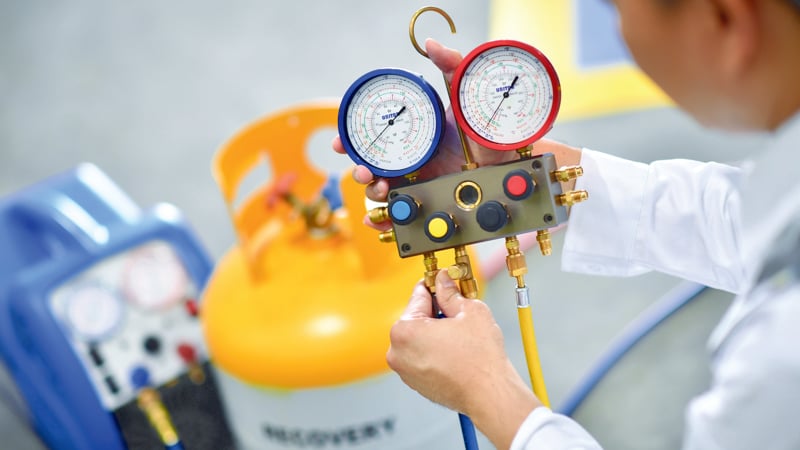
Setting up for refrigerant recovery with the Unitor Digi-Manifold
Crew capability is central to that approach. Personnel need suitable equipment and clear procedures to inspect systems, recognise abnormal performance and recover refrigerant before intervention. Consistent practices also make it easier for technical teams ashore to compare vessels, identify repeated issues and plan maintenance or conversions across the fleet. Refrigeration management becomes more effective when procurement, technical management and vessel crews work from the same standards.
A three-step Responsible Refrigeration approach
Responsible Refrigeration turns the regulatory challenge into three practical priorities. Together, these actions reduce the risk of treating refrigerant selection, maintenance and procurement as separate issues.
1. Adopt suitable lower-GWP refrigerants
Newbuilds can consider lower-GWP options from the design stage. Existing vessels may use retrofit-compatible alternatives that reduce climate impact without extensive modification.
The right choice depends on equipment design, safety classification, operating conditions and service availability. Newbuild systems offer greater design flexibility, while existing installations require closer attention to compatibility and the safety infrastructure already onboard. A refrigerant that works technically must also be supportable in the ports and regions where the vessel operates. The aim is not simply to select the lowest GWP, but to use a proven option that balances emissions reduction with performance, safety and uptime.
See the emissions impact and the potential benefit of a lower-GWP alternative with our Refrigerant CO2 calculator below.
2. Minimise refrigerant loss
Preventing leakage is one of the fastest ways to reduce refrigeration emissions and avoid repeated top-ups. Routine electronic leak checks should be part of onboard maintenance. UV tracing can help locate intermittent leaks, while fixed monitoring may provide continuous warning for critical systems.
Refrigerant should also be recovered before maintenance, repair or equipment disposal. Proper recovery supports recycling, reclamation or destruction and avoids unnecessary atmospheric release.
Support better leak prevention and recovery with the Unitor range of equipment below.
3. Improve efficiency and traceability
Correct charge levels, clean filters, unobstructed airflow and preventive maintenance help compressors operate efficiently. This reduces energy use, protects components and supports the benefits of lower-GWP refrigerants.
Shipowners should also source refrigerants from reputable suppliers and maintain clear documentation. Illegal, misdeclared or counterfeit products may create performance, safety and compliance risks, particularly as HFC supply tightens. Products that do not meet required purity or moisture specifications may damage components or invalidate expected performance. Clear purchasing controls can help prevent short-term availability or price pressure from introducing unknown products into critical systems. Documentation should follow the refrigerant from supply through storage, use and return. Traceable cylinder arrangements can also support better stock control and reduce uncertainty about product origin and handling.
Take the next step and bring refrigerant transition, leak control, recovery and efficient system operation together into a Responsible Refrigeration approach.
A practical path forward
Responsible Refrigeration is not a single product change. It is an ongoing approach that links refrigerant selection with leak control, recovery, system efficiency and responsible sourcing.
By embedding these practices across the fleet, shipowners can reduce direct and indirect emissions, protect critical equipment and strengthen compliance readiness. The future of maritime refrigeration will be defined not only by which refrigerant is used, but by how responsibly the full system is managed throughout its lifecycle.