Last updated: 19/02/2026 05:28:02
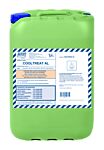
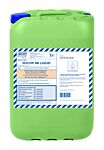
OXYGEN CONTROL 25 LTR
Product Code
- Product group:
- 655
- Product number:
- 571315
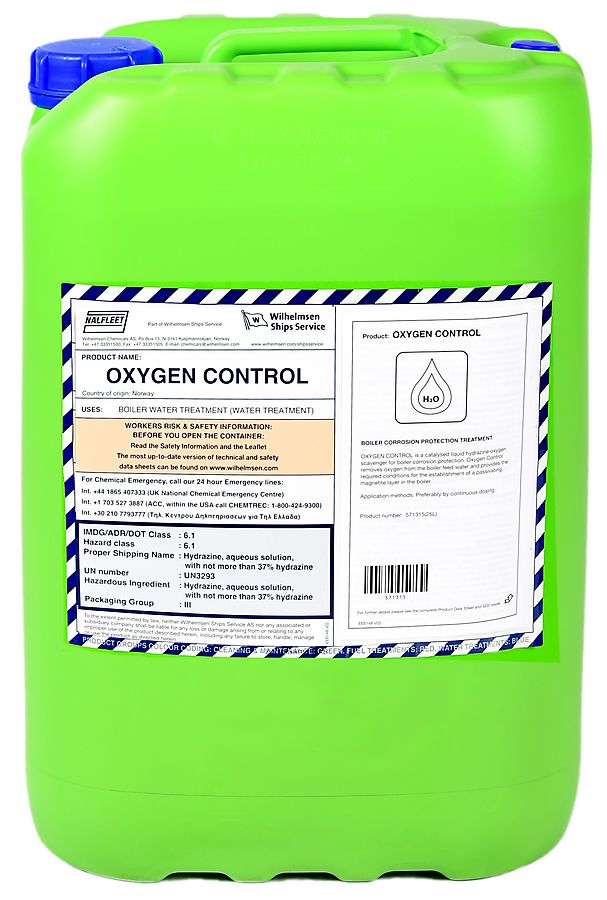
Advanced Corrosion Protection for Boiler Systems Oxygen Control is a catalysed liquid hydrasine oxygen scavenger designed for boiler corrosion protection and treatment. This product creates the ideal conditions for forming a passivating layer of magnetite in the boiler, ensuring comprehensive protection against oxygen corrosion.
Product information
This product supersedes product no: 777705
Why Choose Oxygen Control?
Choosing Oxygen Control means opting for reliable performance that ensures effective oxygen scavenging and corrosion protection. Its user-friendly nature makes it easy to use, with straightforward testing for maintenance. By reducing corrosion and promoting passivation, it enhances system longevity, protecting and extending the life of your boiler system.
Invest in Oxygen Control today to ensure your boiler system operates efficiently and remains protected from oxygen corrosion.
Enhance system reliability and longevity with our advanced treatment solution.
Features
Easy to Feed: Liquid formulation simplifies dosing and application. Non-Conductive: Does not contribute to conductivity in the boiler system. Comprehensive Protection: Safeguards boilers, steam lines, condensate lines, and feed water lines from corrosion. Fast-Acting: Catalysed for rapid action and effective oxygen scavenging. Supports Deaeration: Assists in mechanical deaeration processes. Simple Testing: Easy-to-conduct tests to determine treatment levels. Versatile Use: Can be used to condition water for laying up boilers in a wet condition.Dispersant Action: Suspends sludge and sediment particles for efficient removal by blowdown. Clean Boiler Tubes: Keeps boiler tube surfaces clean, promoting optimal heat transfer conditions. Simple Testing: Easy-to-conduct tests to determine treatment levels.
Benefits
Economical: Cost-effective solution for maintaining boiler system integrity. Corrosion Reduction: Minimises corrosion of iron and copper, extending system life and reliability. Passivation: Promotes the formation of a protective magnetite layer on metal surfaces.
Specification
General
| Invent Hazard Material (IMO/EU) classification | C-9 |
|---|
Physical properties
| Appearance | Colourless |
|---|---|
| Density [g/ml] | 1.0 |
| Form | Liquid |
| pH | 12 |
Technical data
| Not Compatible | Avoid copper, brass and aluminium. |
|---|
Safety Data Sheet (SDS)
Documents
Directions for use
NALFLEET™ Oxygen Control can be used in all boiler systems, from low to high pressures and in conjunction with mechanical de-aeration systems. The treatment combines with dissolved oxygen to form water and inert nitrogen gas, thus effectively removing O2 from the water. No solid materials are produced, so there is no contribution to the increase in total dissolved solids -a critical factor in high pressure boilers. The removal of dissolved oxygen is vital for preventing oxygen pitting and corrosion in boilers. NALFLEET™ Oxygen Control reacts with ferrous and non-ferrous oxides to prevent general corrosion.Ferric oxide (red rust, Fe2O3) is converted to magnetite (black iron oxide, Fe3O4), which is a tough corrosion resistant oxide which protects the metal surface. The term for this is 'passivating' the surfaces, so that they are protected from further corrosion.
Dosing method
For optimum protection, NALFLEET™ Oxygen Control should be fed continuously into the boiler feed line, after the feed pump recirculating valve, using an automatic dosing systems. For steam turbine systems, NALFLEET™ Oxygen Control can be dosed into the cross over between the H.P. and L.P. turbines or the storage section of the deaerator for full protection.
Dosage and control
The objective is to maintain a hydrazine residual between 0.05-1.0 ppm depending on operating pressure and boiler design. Actual consumption is determined under operating conditions.
HYDRAZINE TEST RESULT ppm |
|||||||
Boiler Pressure |
Control Range |
0-0.05ppm |
0.05-0.10 |
0.10-0-.50 |
0.50-1.00 |
1.00-1.50 |
|
<18 to 31 bar |
0.1-1.0ppm |
Increase dose 25% |
Increase dose 25% |
Satisfactory Maintain dose |
Satisfactory Maintain dose |
Decrease dose 25% |
|
31 to 42 bar |
0.1-0.5ppm |
Increase dose 25% |
Increase dose 25% |
Satisfactory Maintain dose |
Decrease dose 25% |
Decrease dose 25% |
Recommended Control Limits in ppm. These are typical values. Follow boiler manufacturers guidelines where required.
Wet lay-up
When wet lay-up of the boiler is required then a minimum dosage of 1.25 litres/tonne of boiler water is required.
Sampling and testing
A representative sample of boiler water should be drawn for analysis daily. The sample should always be taken from the same point after blowdown, cooled and tested immediately. Follow the WSS Test Kit instructions and log the results in Waterproof. The results should be sent to WSS as stated in the Waterproof instructions.
It is important that regular testing is carried out to ensure levels of treatment are correct.
Related products
Accessories
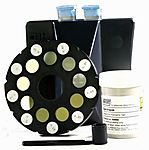
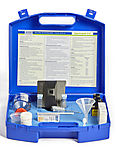
Test Kits for Hydrazine, P Alkalinity, Chloride and pH.