03 Dec 2025
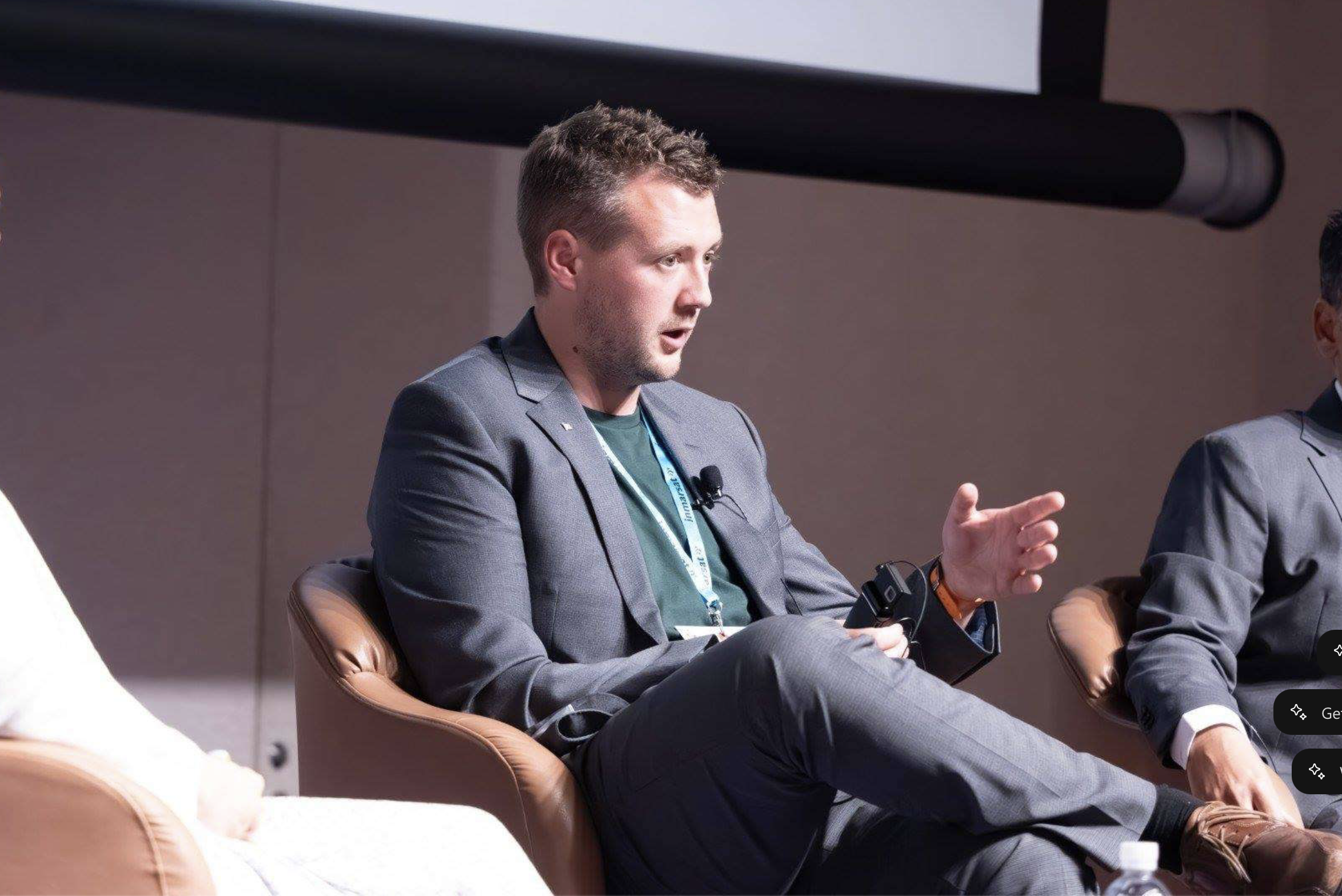
Meet Marty Cochrane, CEO, Ceataec
Meet Marty Cochrane, CEO, Ceataec
Ceataec is Wilhelmsen’s specialist digital development team, bringing together 15 software developers, data scientists and engineers to build software, automate processes and solve operational problems across the group. As CEO, Marty Cochrane leads the team from Norway, while his colleagues work remotely across Europe.
Solving problems across Wilhelmsen
Marty describes Ceataec as an internal consultancy and specialist resource pool. Business units bring in the team when they need software developed, data analysed, a process automated or specialist digital expertise to help solve a problem. Ceataec also builds dedicated products on behalf of Wilhelmsen businesses.
That gives the team exposure to a striking variety of work.
“One day we’re dealing with very unique problems at a port, the next day we’re dealing with safety issues on board a vessel, and the next day we’re dealing with logistics and supply chain issues getting equipment to a ship.”
Marty’s job is partly to make sure their applied technology remains focused on the problem rather than becoming an end in itself. That means understanding what needs to be achieved, putting people with the right strengths onto the task and measuring whether the result is actually useful.
The team also shares its expertise more widely. Shortly after Marty joined Wilhelmsen, Ceataec offered a beginner’s Python course expecting perhaps five participants. Around 200 people signed up within half a day, including colleagues from outside Norway.
It was a clear sign that there is an appetite across group employees not simply for digital tools, but for learning how to use them and adapt them.
Building a remote team by design
Ceataec’s people are spread across 10 European countries. Marty sees that as a strong tactical advantage: rather than recruiting within commuting distance of an office, the company can look much further afield for the skills it needs.
But a distributed team only works, he says, if the way people communicate and collaborate is deliberately designed around it.
Daily updates are asynchronous rather than tied to a fixed meeting. Every six weeks, the team holds a retrospective to discuss what has worked, what hasn't and what should change. Another rule is “public before private”: questions and conversations are kept in shared channels where possible, rather than between individuals, allowing others to contribute or simply stay informed.
Informal contact matters too, with online Monday coffee catch-ups, Friday social time and ad-hoc huddles when someone needs help with a problem.
Trust underpins the model.
“We don’t have to police, ‘Is this person doing their full eight hours a day?’ You see it through the results.”
Ownership and measurable progress
Marty studied mechanical and software engineering before applying those skills in motorcycle racing and Formula 1 analytics, as well as later leading software development at Norwegian state power utility Statkraft.
Motorsport left him with two ideas that still shape how he manages Ceataec: get feedback on progress quickly and give people genuine ownership of their area of expertise.
He points to the approach of former Formula 1 team principal Ross Brawn, who encouraged individuals to concentrate on making their own contribution the best it could possibly be. Marty applies much the same principle at Ceataec.
“We know who’s good at what, and we put them on their task, and that’s their speciality.”
He is equally enthusiastic about process, although not bureaucracy. Good processes, in his view, allow people to know what happens next and make progress without repeatedly waiting for approval.
That instinct for practice, measurement and improvement also appears outside work. Marty volunteers with the Norwegian Society for Sea Rescue, where crews train repeatedly for demanding situations at sea.
“Was it better this time than last time? What can I do better? That really motivates me.”
It's much the same question he asks at work: give people ownership, measure whether something is working, learn from it and improve.