05 Oct 2026
Meet Jarosław Jędrzychowski, Master Mariner. Wilhelmsen Ship Management
Meet Jarosław Jędrzychowski, Master Mariner for Wilhelmsen Ship Management
Captain Jarosław Jędrzychowski is a Master Mariner with Wilhelmsen Marine Personnel in Szczecin, part of Wilhelmsen Ship Management (WSM). For more than a decade, he has commanded seismic vessels managed by WSM on behalf of TGS, with overall responsibility for the safety, navigation and operation of ships carrying out complex offshore survey work.
Leading complex offshore operations
Jarosław has served on some of the world's most advanced seismic vessels including Atlantic Explorer, Ramform Sovereign, Ramform Vanguard and Ramform Atlas. As Master, he leads the maritime crew and works alongside the specialist survey and data teams onboard.
While those specialists focus on collecting and processing geophysical data, Jarosław’s responsibility is to provide the safe, stable and precisely navigated platform that makes that work possible.
Seismic vessels tow specialised equipment behind the ship, including long streamers fitted with hydrophones. Depending on the project, the spread can extend more than eight kilometres astern and cover a swathe of seabed over a kilometre wide.
That places particular demands on ship handling. Survey lines must be followed accurately at speeds of around 4 to 5 knots, while the scale of the equipment means manoeuvrability is restricted and even changing direction can require a turning radius of more than three kilometres.
“Our responsibility is to monitor these systems, verify that all operational parameters remain within acceptable limits and ensure the work is carried out safely and efficiently,” Jarosław explains.
“The priorities remain unchanged: operate safely, comply with international regulations and maintain the highest professional standards.”
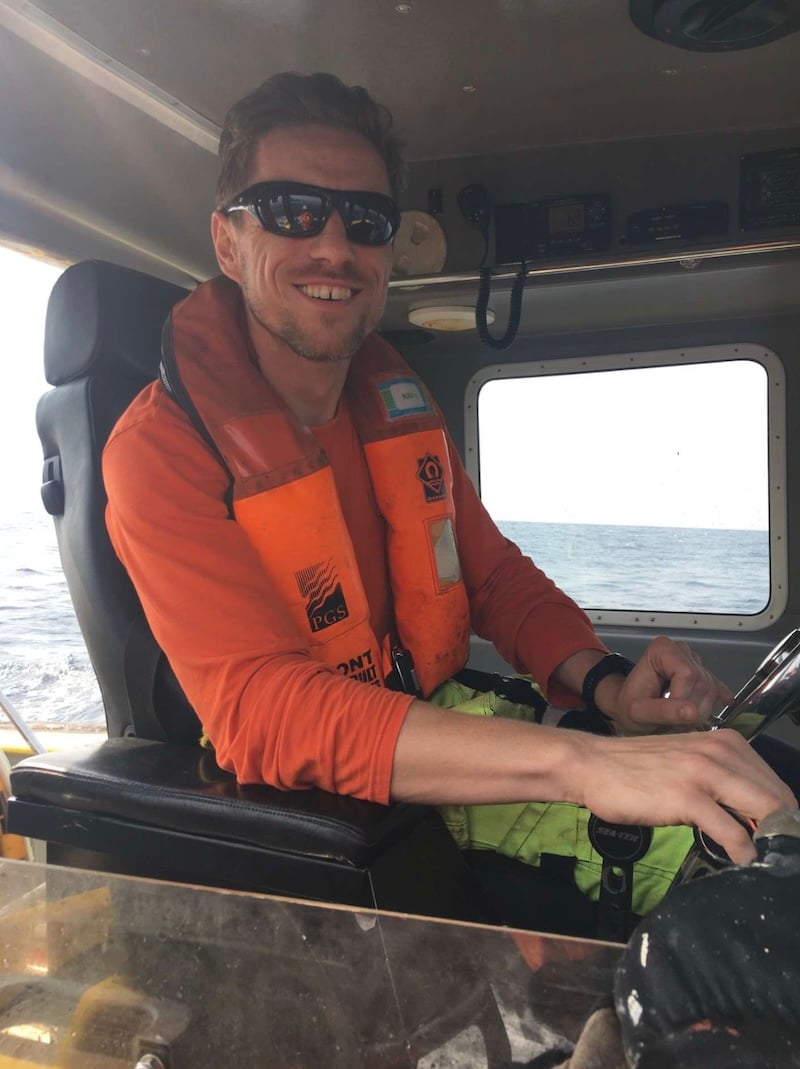
Teamwork far from shore
Seismic vessels often work well away from established shipping routes and ports. Maintenance, repairs, logistics and even crew changes may therefore need to be carried out at sea whenever it is safe and practical.
That puts a premium on planning, communication and problem-solving across the vessel.
“Keeping operations running safely and efficiently throughout long offshore campaigns requires everyone, from the bridge to the engine room, to adopt a solution-oriented mindset,” Jarosław says. “Everything depends on teamwork and careful planning. Returning to port to solve a technical issue is generally considered the last option.”
Among his most memorable assignments have been surveys more than 250 nautical miles from the nearest port off northern Brazil and around 240 nautical miles from Nuuk in Greenland.
Life offshore also means extended periods away from home. Jarosław currently works a six-weeks-on, six-weeks-off rotation, although earlier in his career his trips sometimes lasted up to four months.
“On the positive side, when I’m back, I can really focus on family life and catching up on things at home.”
Challenges build resilience
A graduate of the Maritime University in Szczecin, Jarosław says the challenges of life at sea have taught him resilience and prepared him for whatever comes next.
“Difficult experiences and challenges make us more resilient, more experienced and better prepared for whatever comes next.”
Years spent working offshore have also given him a lasting respect for the environment in which he works.
“Working as a seafarer has given me tremendous respect for the ocean. On a calm day on shore it might seem predictable and familiar, but spending long periods offshore reveals just how powerful and dynamic the ocean truly is.”
For Jarosław, the role combines responsibility for ship and crew with precise navigation, teamwork and the challenge of operating safely far from shore.