Last updated: 09/07/2026 12:08:34
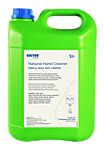
BILGEWATER FLOCCULANT 25 LTR
Product Code
- Product group:
- 302
- Product number:
- 690669

Keep Your Bilge Water Clean and Compliant Ensure compliance with international environmental regulations and maintain the efficiency of your bilge water treatment system with Bilge Water Flocculant. This highly effective liquid treatment, based on Poly Aluminium Chloride (PAC), is designed to separate oil residues from bilge water, ensuring cleaner discharge and safer operations.
Product information
Why Choose Bilge Water Flocculant?
Choosing Bilge Water Flocculant ensures regulatory compliance, helping meet strict international standards on oil content in effluent water, with discharged water containing less than 3 ppm oil. Its low dosage requirements make it a cost-effective solution for long-term use. The product's versatile performance is effective over a wide pH range, eliminating the need for additional pH-stabilising chemicals. Additionally, it is approved by manufacturers of bilge water cleaning systems, guaranteeing reliable performance.
Invest in Bilge Water Flocculant today for efficient, compliant, and economical bilge water treatment.
Features
Poly Aluminium Chloride (PAC) Based: Specially selected for its effectiveness in bilge water treatment. Iron-Free Formula: Safe for the environment and compliant with eco-friendly standards. Dual Action: Breaks oil-in-water emulsions and builds flocs for easy filtration. Minimal Residue: Remaining oil sludge contains very little water and can be burned onboard or pumped ashore.
Benefits
Economical Use: Low dosage requirements reduce overall treatment costs. Extended pH Range: Effective across a broad pH range, simplifying treatment processes. System Efficiency: Enhances the performance of multistage bilge water cleaning systems, including mechanical separation, emulsion breaking, flocculation, and filtration.
Specification
General
| Suggested Inventory Hazard Material classification | C-49 |
|---|
Physical properties
| Appearance | Clear |
|---|---|
| Density [g/ml] | 1,30 - 1,36 |
| Form | Liquid |
| pH | 1,0 |
Technical data
| Not Compatible | Corrosive to cast iron as concentrate. Non-corrosive to all metals at use concentration. |
|---|
Approvals
- Approved by manufacturers of bilge water cleaning systems.
Safety Data Sheet (SDS)
Documents
Directions for use
Shake Bilgewater Flocculant drum well prior to usage
Dosing method
Typical dose rate: 100 - 500ppm (0.1 - 0.5 litre/m3 of water)
In a multistage bilge water cleaning system, Unitor™ Bilge Water Flocculant™ is fed undiluted through a dosage pump connected to the pressure side of the oil descaler. The floc tank is fed according to the flow of the bilge water pumped into it. The feed is adjusted in connection with the installation and normally needs no alteration. If required, dosing can also be controlled by measuring the level in the container.