Last updated: 14/01/2026 12:38:46
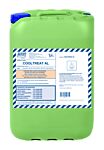
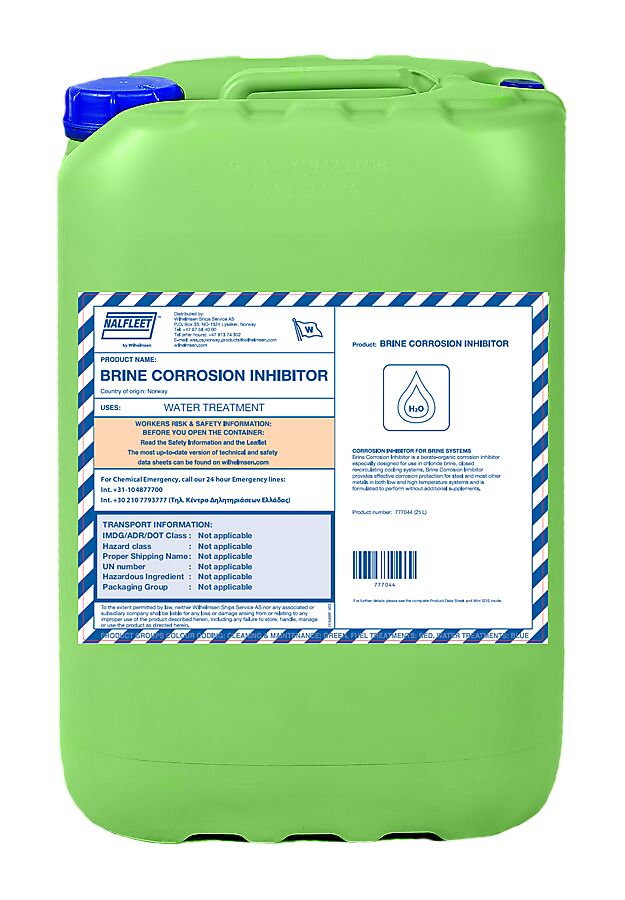
BRINE CORROSION INHIBITOR 25 LTR
Product Code
- Product group:
- 653
- Product number:
- 777044
Superior Corrosion Protection for Brine Cooling Systems! Brine Corrosion Inhibitor is a borate-organic corrosion inhibitor specifically designed for use in chloride brine closed re-circulating cooling systems. It provides effective corrosion protection for steel and most other metals in both low and high temperature systems without the need for additional supplements.
Product information
This product supersedes product no: 77337.11R, 79337.11U
Why Choose NALFLEET™ Brine Corrosion Inhibitor?
Reliable Protection: Ensures comprehensive corrosion protection for all components of your brine cooling systems. User-Friendly: Formulated to perform effectively without the need for additional supplements. Versatile and Effective: Suitable for a wide range of systems, providing flexibility in application.
Trusted Performance: Preferred by industry professionals for its proven effectiveness and reliability.
Features
Specialised Formulation: Designed specifically for brine cooling systems. Multi-Metal Protection: Offers corrosion protection for a variety of metals.
Benefits
Versatile Application: Suitable for corrosion inhibition in various closed re-circulation systems, including diesel engines, compressors, centralised hot water heating systems, and auxiliary machinery cooling water systems. No Precipitation Issues: Can be used in chromate-containing systems without causing precipitation. Enhanced System Longevity: Protects against corrosion, extending the life of your cooling systems.
Specification
General
| Invent Hazard Material (IMO/EU) classification | C-7 |
|---|
Physical properties
| Appearance | colourless to yellow |
|---|---|
| Density [g/ml] | 1.16 to 1.19 |
| Form | Colourless liquid |
| pH | 11.5 - 14 |
Safety Data Sheet (SDS)
Documents
Directions for use
The recommended dosage for NALFLEET™ Brine Corrosion Inhibitor is 17.5 litres per tonne of brine in the system. NALFLEET™ Brine Corrosion Inhibitor may be added directly to the system either neat or in a water dilution. Dilutions should be made with evaporated water. If a chemical dosing pump is used then pump and lines should be mild steel, stainless steel, Teflon, polyethylene, PVC, polypropylene or rubber.
Conversion from chromate NALFLEET™ Brine corrosion inhibitor is compatible with chromate. Systems with chromate need not be flushed before adding the product. Let chromate deplete naturally and maintain boron level at a minimum of 70ppm. NALFLEET™ Brine Corrosion Inhibitor should be fed slowly. Start feeding 5 to 10% of the total dosage at a time and watch for foaming. Gradually increase the feed rate. NALFLEET™ Brine Corrosion Inhibitor does not induce foaming at normal dose rates, but if it is fed too much too soon, foaming may occur. Feed lines and pumps should be mild steel, stainless steel, Teflon, polyethylene, PVC polypropylene or rubber.
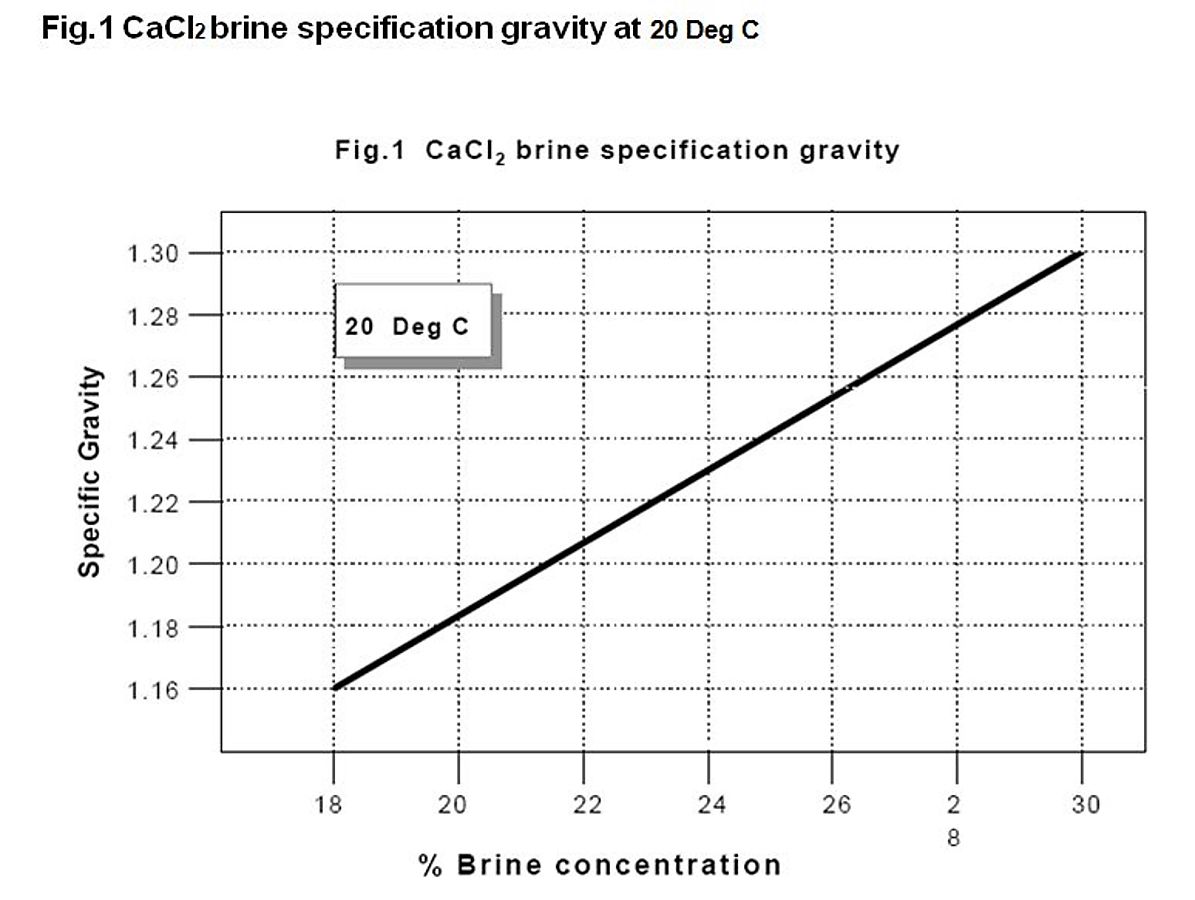
Testing and Control Control NALFLEET™ Brine Corrosion Inhibitor as Boron at 70 - 100 ppm Note: Because the specific gravity of the brine varies with concentration, the resulting level of boron should be calculated as follows:
mg/L Boron/S.G. Brine* = ppm Boron ref. attached table