Why replacing expired flashback arrestors is critical for safe, compliant maritime gas welding & cutting

威尔森观察
|
Clarence Lee, Technical Sales Manager, Welding & Gases South East Asia

Executive summary
Expired flashback arrestors (FBAs) are a silent but serious threat to safety, uptime and regulatory compliance on board. Container ships, bulkers and tankers that continue to use out-of-date FBAs risk failed SIRE / RightShip inspections, costly hot-work delays and—most importantly—crew injury. This article explains the problem, quantifies the business impact, and shows how Wilhelmsen Ships Service (WSS) Experts and UnitorTM products keep maritime hot-work safe, simple and compliant.
1. What exactly is the problem?
A flashback is a reverse flow of flame that travels from the torch nozzle back through the hose into regulators or cylinders. In extreme cases it can culminate in an explosion. A flashback arrestor is a spring-loaded non-return valve combined with a flame-arresting element that extinguishes the flashback before it reaches the gas supply. International standards such as ISO 15615, UK MCA COSWP, BCGA CP7, to name a few, all mandate the use of FBAs on every acetylene and oxygen gas line.
International standards such as ISO 15615, UK MCA COSWP, BCGA CP7all mandate the use of FBAs on every fuel-gas and oxygen line.
Flashback Arrestors have finite service lives. Elastomer seals harden, sintered filters clog and valves lose response speed. In the event of a flashback, the FBA will not be able to prevent it as intended, and the flame can travel through the hose back into the cylinder.
As a result, more manufacturer standards and industry guidelines are aligning towards replacing FBAs every 5 years. When they remain in service beyond that date, three inter-related risks emerge:
|
 |
2. Who is most affected?
|
Vessel type / operation |
Typical welding & cutting demand |
Consequences of FBA expiry |
|
Containers |
Routine steel repairs, lashing & structural mods while alongside |
Increased risk of flashback incidents during continuous hot work; potential injury or fire risk |
|
Bulk carriers |
Occasional steel repairs on hatch coamings, ladders, walkways, and cargo hold structures during port stay or voyage |
Unnoticed expired FBAs increases the risk of failure in service during intermittent hot work; risk of flashback amplified by large vessel layout and long inspection intervals |
|
Tankers |
Structural repairs plus frequent pipeline and valve maintenance; strict hot-work controls due to hydrocarbon cargo |
Severe consequences if FBAs fail—flashback in cargo systems could cause explosion or fire; critical safety breach under stringent compliance requirements |
3. Why does the challenge keep arising?
-
Inspection pressure is increasing. RightShip RISQ 3.2 and OCIMF SIRE 2.0 both elevate hot-work safety as a critical element. An expired FBA or missing non-return valve is often cited as a frequent welding deficiency.
-
Crew turnover & knowledge gaps. New crew members frequently overlook annual records of critical welding equipment inspection and renewals when taking over welding sets.
-
Supply-chain disruption. Global logistics volatility makes it harder to get certified replacements to the right vessel at the right time, especially when sailing tramp schedules.
-
Cost avoidance. At first glance a 3- to 5-year replacement cycle seems “excessive”, leading to extended use beyond manufacturer limits.
4. The business impact
|
Impact area |
Typical consequence |
|
Financial |
Up to USD 100 000 in unplanned off-hire or port-stay extension if a hot-work permit is denied until FBAs are replaced. |
|
Safety / reputation |
A single flashback incident can injure crew, damage equipment and drive insurance premiums. Reference cases show burns and machinery loss aboard several vessels over the past decade. |
|
Compliance |
SIRE / RightShip “Observation” → follow-up inspection → potential charter penalties or lost fixtures. |
|
Operational |
Work-around solutions (cold-repair plates, hiring shore teams) slow itinerary progress and inflate costs. |
“Welding safety is no accident” aptly summarises the stakes.
5. The Wilhelmsen solution
5.1 Certified Unitor® flashback arrestors
-
Conform to ISO 5175-1.
-
Hard stamped production dates for instant visual validation.
-
Integrated thermal cut-off valves and non-return check.
5.2 Expert Service support
-
Lifecycle tracking – WSS Experts create records of FBA production dates and send proactive renewal reminders when needed.
-
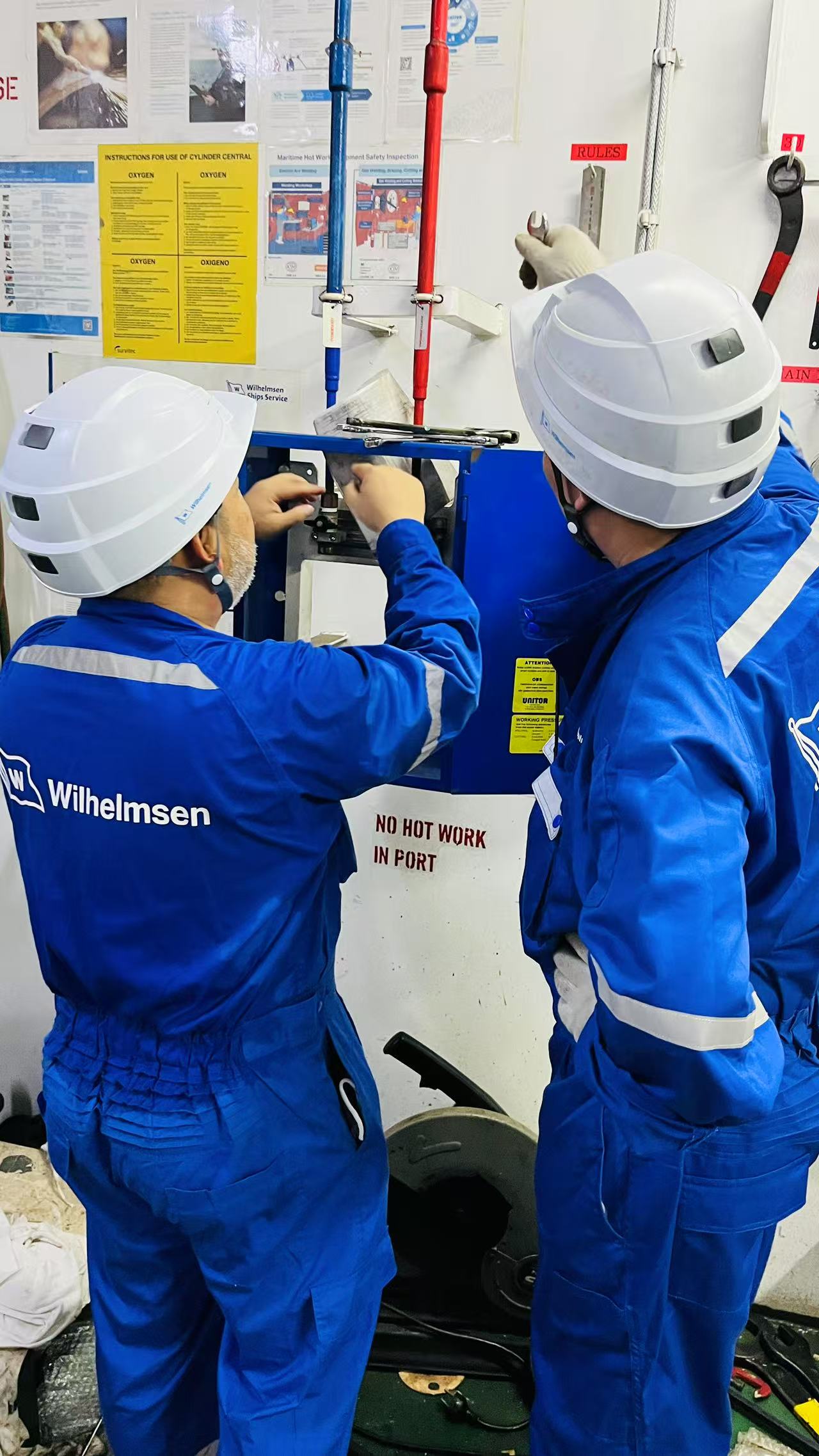
On-board audits – certified Port Service Engineers (PSE) verify correct installation, condition and compliant production dates. Further inspection and functional testing can also be arranged with a full gas welding system inspection.
-
Training – IMO-model course aligned e-learning modules and toolbox talks on hot-work best practice.
-
Global Availability – replace expired FBAs supplied by our global network.
5.3 Digital enablement
-
Our Inspection Dashboard in Oneplace consolidates your WSI inspection results and highlights any welding safety risk areas.
6. Proof of performance
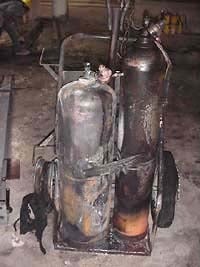
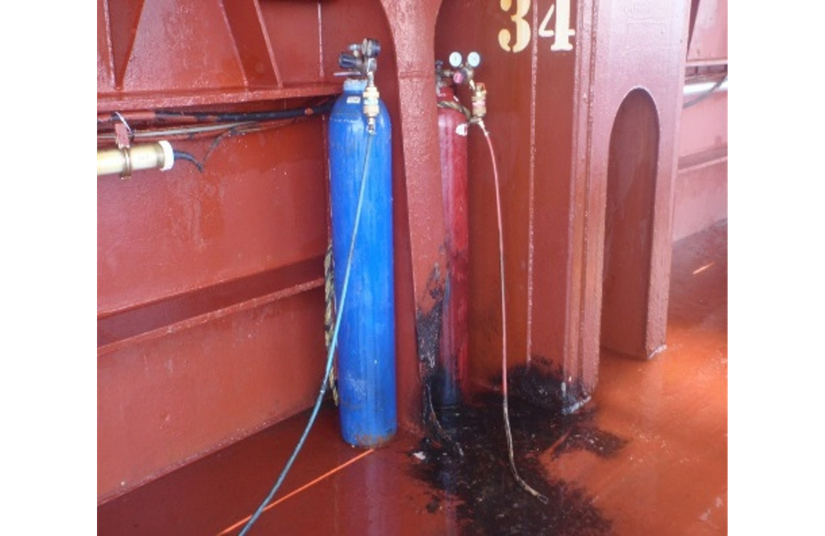
A fire occurred onboard a vessel in the engine room workshop outlet station. Subsequent investigation determined the cause to be a flashback, triggered by contamination at the nozzle and a loose hose-to-flashback arrestor connection, resulting from improperly tightened adjustable clamps.
Fortunately, the flashback was successfully contained at the outlet station by the flashback arrestor, as the crew had followed annual inspection guidelines and maintained the service life of the arrestor within five years. The Unitor flashback arrestors installed proved effective in preventing the flashbacks from reaching the cylinders, thereby averting the risk of a larger fire or explosion.
Following this incident, the customer installed an additional pair of flashback arrestors at the hose-to-shank connection to further protect against flashbacks reaching the hoses or outlet station—a practice that has since been adopted under SIRE 2.0.
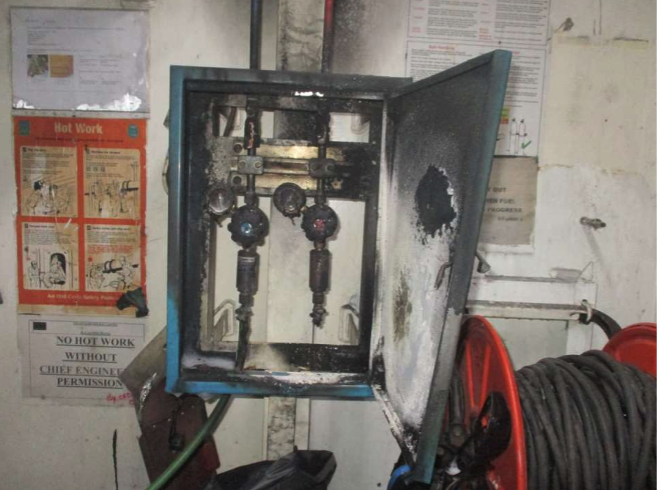
Figure 1: Customer photo of flashback at the outlet station prevented by the FBA
7. The regulatory roadmap
-
ISO 5175-1:2017 – design & performance requirements for FBAs.
-
BCGA Code of Practice 7 – emphasizes routine FBA inspection and replacement.
-
OCIMF SIRE 2.0 – Questions 10.3.7 requires date-validated FBAs.
-
RightShip RISQ 3.2 – Question 4.17 mandates annual checks and 5-year renewal.
8. Implementation checklist for ship managers
-
Document every FBA – record serial, location, expiry date.
-
Replace units older than 5 years or showing signs of damage / backflow test failure.
-
Train crew in torch-light testing and regulator shut-down procedure.
-
Partner with WSS Experts and engage a Welding Safety Inspection and GDS Inspection & Testing Service for peace of mind and assurance.
9. Conclusion
Expired flashback arrestors may seem like a minor line-item, but they are a major determinant of welding safety, operational integrity and inspection success. With international regulations tightening and charterers demanding ever-higher safety standards, proactive management is essential.
Wilhelmsen Ships Service combines certified Unitor® hardware, a 2,200-port supply chain and a 24/7 Expert Service team to turn this compliance headache into a simple, one-click solution.
Get in touch with our experts
Ready to audit your fleet’s flashback arrestors or plan a seamless renewal? Contact us today and sail ahead with confidence.
Clarence Lee – Technical Sales Manager
Welding, Gas & Cylinders
Lee, Clarence is a Technical Sales Manager for Welding & Gases at Wilhelmsen Ships Service in Singapore, supporting customers with safe, compliant, and efficient welding and gas‑handling operations. Leveraging 17 years of technical expertise and hands‑on industry experience, he helps vessel operators optimise hot‑work setups, maintain regulatory compliance, and improve onboard safety. Clarence works closely with crews and internal teams to provide guidance on welding equipment, flashback arrestor management, and best practices, making him a trusted expert for fleets across the region.