The Accelerator - meet Marty Cochrane
Speed, systems and precision thinking aren’t just metaphors for Ceataec CEO Marty Cochrane – they’re the tools he’s carried from motorsport racing circuits to the heart of Wilhelmsen’s digital transformation.
“What would I be doing If I wasn’t at Ceataec? That’s quite easy," Marty says. "I’m passionate about the environment, so I’d likely be working at the intersection of digital and science. Before Covid hit, I was just days away from accepting a research post on Heron Island in Australia to work on building a digital tracking solution for sharks."
But there’s plenty he can still do in maritime, environment-wise. "Although polluting, it's still the most efficient way to transport goods around the world. With our skills at Ceataec we can build a solution that'll save 5% to 10% of fuel on every voyage. That’s low-hanging fruit and across many vessels the emissions reduction can be huge.”
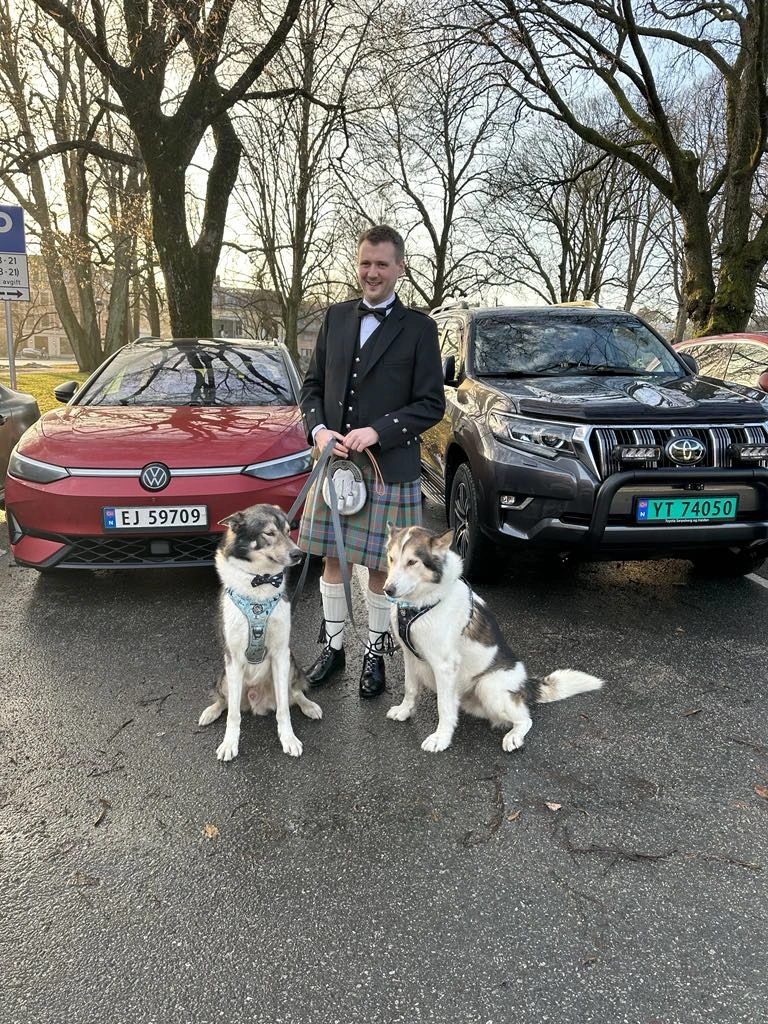
From singing in church to F1
Marty hails from Belfast in Northern Ireland where, “believe it or not, as a kid I was a choirboy and pretty well-behaved. But a bit wild too, falling out of trees and racing around on my bike".
He admits school was a struggle. “I’m badly dyslexic so I hated it." Computers saved him, as well as an innate fascination for machines. "That was the origin of my interest in controlling machines through software – and which led me to study mechanical and software engineering.”
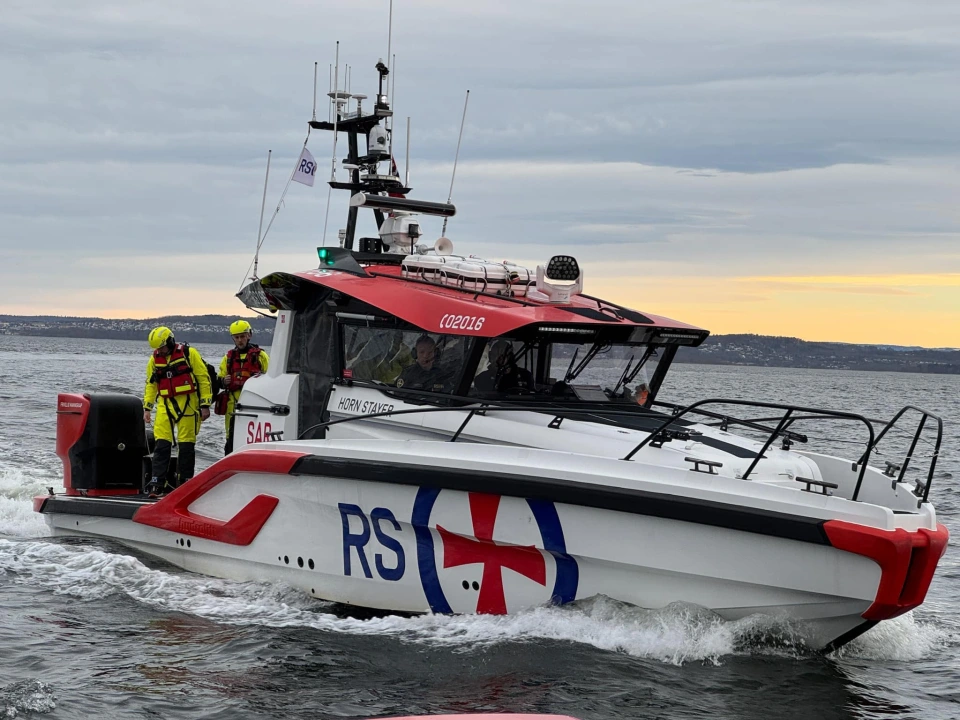
His instinct for machines found a natural home in Northern Ireland’s unofficial national sport – motorbike racing. "It’s in the DNA of Northern Ireland boys,” he says. “I was competing with people like Jonathan Rea, now six-times world Superbike champion. Again, it was at the point when sensors and data were first making their way into motorsport. That became my niche – riding bikes at a high level as well as doing analytics.”
This soon became a professional hobby. “I got paid by teams to develop bikes, race bikes and optimise the geometry. I ended up doing the same in Formula 1," he says. "Fun fact: in Formula 1, 95% of the analytics are done on the car. In bikes it's 50% optimising the bike and 50% coaching the riders because they are such a dynamic part of the whole thing."
From racing to power grids
He could have made motorsport his life. “I had the option to go 100% professional but I had plenty of friends whose careers were cut short by injuries. I didn't want that, although I kept up the hobby and was until very recently still working with BMW's World Superbike team.”
He chose the corporate world which led him first into energy. “Quite by chance I was introduced to Statkraft in Norway, who invited me to lead their software development team. I did that for six years then joined a start-up that was doing some work in maritime. That got me into this business – optimising big assets, saving fuel, enhancing safety, automation – and to Wilhelmsen.
What Ceataec actually does
“The least sexy way to describe us is as an internal consultancy in Wilhelmsen – we're a core resource pool of software developers, data scientists and engineers. When any business unit wants to build software or automate a process, they call us in. But we're also working on products that are potentially quite disruptive and that we’ll make available externally... Too soon to go into details."
Cross-group exposure is the best part of the job, Marty says. “One day we might be dealing with port problems, another with onboard safety, the next logistics and supply chain. We get insight into problems right across the industry.”
Why shipping still excites him
“In extreme sports like Formula 1, you have to work really hard to get tiny percentage gains. In maritime, there’s so much ready for the picking – which is exciting because you can make a bigger impact sooner.”
He’s equally frank about industry blind spots. “IT is still seen as a major black hole, a forever cost pit. That's because of all the hype around cool stuff like blockchain and AI. But right here right now, there’s much simpler things we can do that won't cost the Earth.”
Marty draws two enduring lessons from his motorsport days: “An extreme demand to see results fast… and an extreme focus on people feeling ownership for their work.” He credits Ross Brawn, “maybe one of the most famous Formula 1 team principals”, as a major influence. “He encouraged everyone to focus on their individual part, do that better than anyone else in the world, and if everyone does that, then as the car comes together it will naturally be the best on the grid. That’s very much how we try to work too.”
Building remote-first culture
Ceataec’s team of 15 is spread across 10 countries in Europe. “Why restrict yourself to a 50-kilometre radius talent pool?” he says. “I needed the best people for what I call my lean, mean engineering team, so I had to open the field. It's a no-brainer.”
Remote work, for him, is a design choice. “A lot of companies fell into remote because of Covid or having offices all over the world. That's remote by necessity, not by intention. If you set out to have a remote or hybrid team, you need to build a remote culture from the ground up.”
That means clearly defining norms: “What does it mean to join us? What will your first day look like? What rules and processes do we have? We also avoid rigid meetings in favour of an asynchronous flow. We do a daily stand-up using a bot, which flexes around individual lives – early risers, night owls, parents, gamers – but the work keeps moving.
What holds it together, he says, is openness and trust. “We self-police. It’s a very high-performing team, so if someone doesn't pull their weight, it won’t take long to surface.”
They also make space for connection. “We have a Monday-morning coffee catch-up, Friday social time and ad-hoc huddles where anyone can ping the group for quick input,” he says. “Even though we’re spread across Europe, it feels like we’re next door to each other. And people who do projects with us they often comment on how efficient it is.”

Performance, not bureaucracy
Marty's wider message to colleagues is about mindset. Measuring performance, he argues, isn’t just about quarterly results or financial targets. “That won't tell you how well your team is performing. What matters is defining the right metrics and KPIs at team level – then tracking and improving against them. Once you start doing that,” he says, “you can make faster, smarter decisions about where to invest time and training.”
He laughs at his own intensity. “I’m an absolute process freak,” he admits, “When people hear the word process, they think bureaucracy. For me, it’s the opposite. Good processes are what let you move fast. You know exactly what happens next – no bottlenecks.”
Outside the office
Meanwhile, at home in Råde south of Oslo, Marty’s life is happily full. “I live by the big Vansjø lake and try to swim every day. We have a five-month-old daughter who I strap onto my chest and disappear into the forest for a couple of hours with the dogs.”
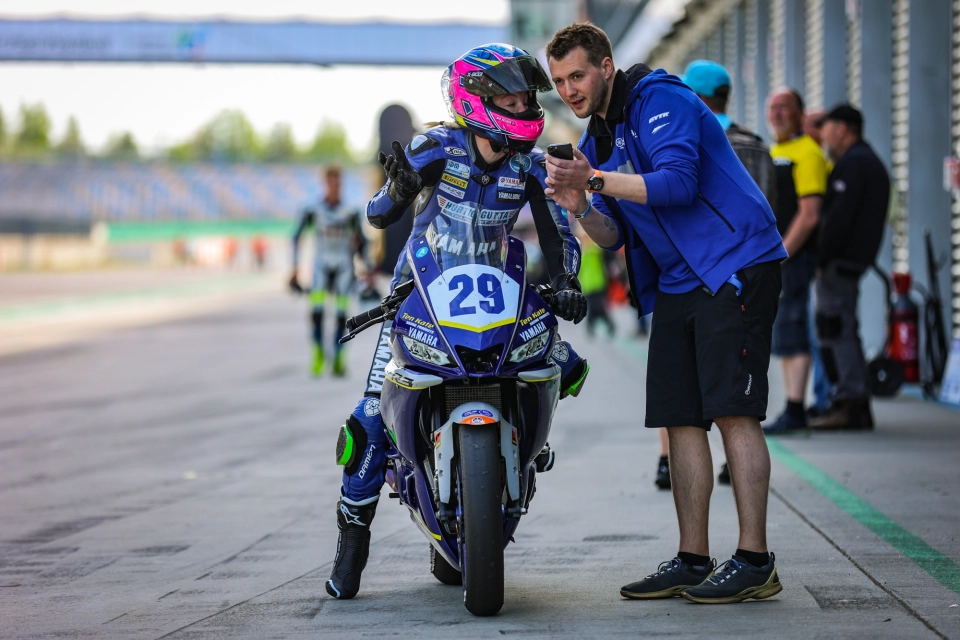
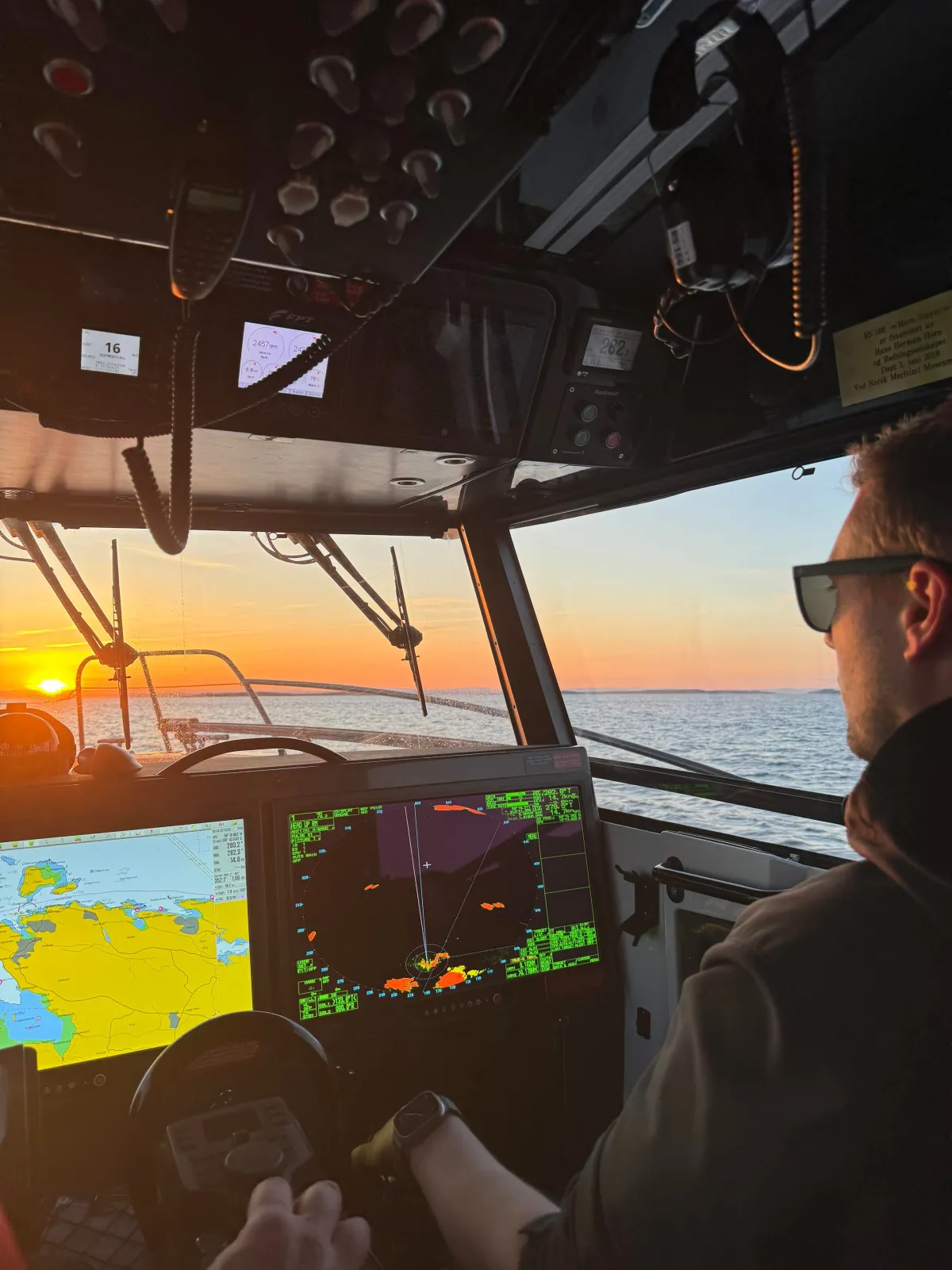
He still bikes but just for fitness – “in winter you'll often see me out on a motocross bike with big, spiked tyres” – and is a volunteer sailor at the Norwegian Society for Sea Rescue station at Fuglevik, also south of Oslo. “We drill constantly. We were out last week practising extracting people from the sea at high speed into a helicopter. It's great because you get to constantly measure yourself. Was it better this time than last time? What can I do better? That really motivates me.”
Marty was interviewed by Roddy Craig